

That subtle tug on your steering wheel as you cruise down Jonesboro Road through McDonough isn’t just an annoyance—it’s actually a warning sign that your wheels have fallen out of alignment, putting both your safety and your wallet at risk. Fall in Henry County brings unique challenges that make alignment issues significantly more dangerous, from wet leaves creating slick patches on Eagles Landing Parkway to occasional rain that turns potholes into alignment-destroying hazards. At McDonough Nissan’s alignment service center, factory-trained technicians understand exactly how local road conditions affect your vehicle’s handling and what it takes to keep your Nissan tracking straight through Georgia’s unpredictable autumn weather.
The “Drift” is a Warning: Handling Henry County’s Changing Roads
When your Nissan starts pulling to one side on straight roads like Jonesboro Road or Highway 155, many drivers initially assume it’s just a minor inconvenience. The reality is far more serious. That drift signals that your wheels are no longer pointing in the same direction, causing uneven tire contact with the road surface. This misalignment forces your tires to work against each other, creating friction that wears down specific areas of your tread far faster than normal.
The problem intensifies dramatically during fall. Between September and November, Henry County weather shifts as cooler air moves in, with sudden showers still possible throughout McDonough. These wet conditions expose the real danger of misaligned wheels—when your tires aren’t making proper contact with the pavement, they can’t channel water away effectively. A light rain on Jonesboro Road or damp morning on Eagles Landing Parkway can quickly become a hydroplaning risk. Your misaligned wheels reduce your vehicle’s ability to grip the road precisely when you need it most.
Henry County roads present particular challenges due to the combination of weather and road conditions. The area’s clay-based soil means potholes can be especially jarring on your daily commute. Each pothole impact has the potential to knock your wheels further out of alignment. Add in leaf debris accumulating along tree-lined sections of Jonesboro Road and Keys Ferry Road, and you’ve got unpredictable handling that becomes genuinely hazardous when your alignment is already compromised.
Why Fall Foliage = Slippery Hazards for Misaligned Wheels
Fall in McDonough brings beautiful scenery, but fallen leaves create one of the season’s most underestimated driving hazards. When leaves get wet from morning dew or afternoon rain—frequent in Georgia’s fall—they create a surprisingly slick surface that behaves almost like ice. Wet leaves reduce tire traction by creating a barrier between your tread and the road, making it significantly harder to maintain grip during turns or sudden braking.
Misaligned wheels make this exponentially more dangerous. When wheels aren’t properly aligned, tires already struggle to maintain optimal road contact. Add wet leaves, and tires have even less surface area effectively gripping the pavement. Your vehicle’s response becomes sluggish and unpredictable, with stopping distances increasing dramatically because misaligned tires can’t bite through that slippery leaf layer.
Shaded road sections where wet leaves linger longer become particularly hazardous. Areas along Jonesboro Road near wooded sections or residential streets lined with mature trees demand extra caution. When wheels are misaligned, you’re fighting two battles—keeping your vehicle tracking straight despite the pull while dealing with dramatically reduced traction from leaves.
It’s Not Just for High Mileage: Protecting Your New Nissan’s Safety Systems
Many drivers believe wheel alignment is only for older vehicles. In reality, modern Nissans—especially models with advanced driver assistance systems—require precise alignment for reasons beyond tire wear. Your Nissan’s safety technologies, including Intelligent Emergency Braking, Lane Departure Warning, and ProPILOT Assist, rely on sensors and cameras that need perfect harmony with your vehicle’s actual direction of travel.
When you get a comprehensive alignment service at McDonough Nissan, technicians adjust the steering angle sensor. This sensor tells your vehicle’s computer exactly where the steering wheel is positioned. According to Nissan’s position statements, any alignment requires proper steering angle sensor reset for accurate calibration. Without this, your safety systems might think your steering wheel is turned when it’s straight.
This misalignment between actual position and what safety systems believe causes serious problems. Lane Departure Warning might trigger unnecessarily or fail to warn when actually drifting. Intelligent Cruise Control needs to know your vehicle’s true direction to function correctly. Even a brand-new Nissan needs proper alignment after hitting a significant pothole—it’s about ensuring every safety system functions exactly as Nissan engineered it.
The “Tire Check” Connection: Bridging Maintenance for Maximum Safety
Wheel alignment and tire maintenance are interconnected in ways that significantly impact both safety and your budget. When wheels fall out of alignment, your tires suffer first. Misalignment causes uneven wear patterns—the inside edge of your tire might wear down much faster than the outside. This uneven wear means you’ll replace tires sooner, and it actively undermines your vehicle’s handling and braking performance every day.
According to the National Highway Traffic Safety Administration, proper tire maintenance can extend tire life significantly while improving fuel efficiency and safety. When wheels are misaligned, your engine works harder to overcome the resistance created by tires fighting against each other. This increased resistance burns more fuel, costing extra money at every fill-up. More importantly, unevenly worn tires don’t grip the road effectively, especially in wet conditions common during Henry County’s fall season.
McDonough Nissan’s service approach treats alignment and tire service as complementary rather than separate issues. When you bring your Nissan in for an alignment check, technicians at the Nissan tire center thoroughly inspect your tires for wear patterns, proper inflation, and overall condition. If your tires show uneven wear from driving with bad alignment, simply fixing the alignment won’t solve the problem—those unevenly worn tires will continue causing handling issues. Often, the most cost-effective approach is addressing both issues together, ensuring your new alignment has properly balanced, evenly worn tires to work with. This comprehensive approach maximizes the lifespan of your tires and ensures your vehicle handles exactly as Nissan intended.
Our Precision Alignment Process: What to Expect
When you schedule an alignment at McDonough Nissan, you’re getting comprehensive precision service that addresses every aspect of your vehicle’s alignment geometry. Factory-trained technicians use state-of-the-art alignment equipment to take precise measurements of your Nissan’s current specifications. This computerized system measures three critical angles: camber (how wheels tilt inward or outward), caster (the angle of your steering pivot affecting stability), and toe (whether wheels point slightly inward or outward).
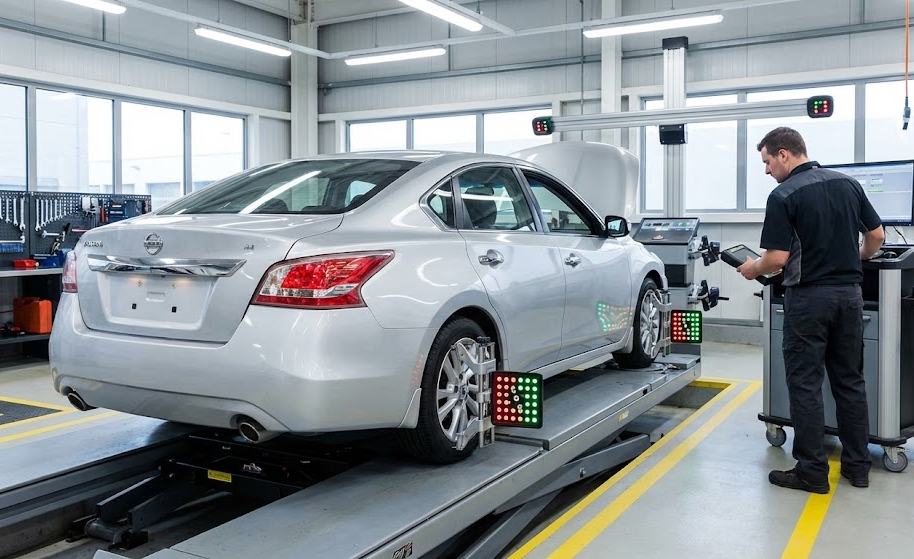
Once initial measurements are complete, technicians make necessary adjustments using precision tools designed specifically for your Nissan’s suspension components. For vehicles equipped with advanced driver assistance systems, there’s an additional critical step—recalibrating the steering angle sensor using professional diagnostic equipment. This ensures safety systems receive accurate information about steering wheel position.
After all adjustments are complete, technicians perform a final measurement to verify every angle meets Nissan’s specifications. They’ll also road test your vehicle to ensure the steering wheel is properly centered and the vehicle tracks straight. The entire process typically takes about an hour, though it can vary depending on your specific vehicle. You’ll receive a detailed printout showing your vehicle’s alignment specifications before and after service. This thorough approach ensures your vehicle handles exactly as it should, with every safety system properly calibrated and your tires positioned for maximum lifespan.
How Wheel Alignment Protects Your Investment
Maintaining proper wheel alignment protects your Nissan investment in multiple ways:
- Extended Tire Life: Proper alignment prevents uneven wear that can reduce tire life by up to thirty percent, meaning your tires last significantly longer and save you hundreds of dollars.
- Improved Fuel Economy: When wheels are properly aligned, your engine doesn’t work as hard to overcome rolling resistance, improving fuel efficiency and reducing your weekly gas expenses.
- Prevents Suspension Damage: Misaligned wheels put extra stress on suspension components like ball joints and tie rods, potentially causing premature wear that leads to expensive repairs.
- Maintains Safety System Accuracy: Modern Nissans need proper alignment to ensure every sensor and camera operates as designed, giving you the full protection these technologies provide.
Regular alignment checks represent one of the smartest preventive maintenance investments you can make for your Nissan.
When to Schedule Your Alignment Check
| Warning Sign | What It Means | Why It Matters in Fall |
|---|---|---|
| Vehicle Pulls to One Side | Wheels aren’t pointing in the same direction, forcing unequal tire contact with the road | Wet leaves and rain showers make this drift more dangerous, reducing your control |
| Steering Wheel Off-Center | Wheel alignment is off, causing your steering wheel to sit crooked when driving straight | Makes it harder to quickly correct when encountering slick spots on Jonesboro Road |
| Uneven Tire Wear | Misalignment is causing specific areas of your tires to wear down faster than others | Unevenly worn tires can’t channel water properly during Henry County’s fall rainstorms |
| Steering Wheel Vibration | Could indicate alignment issues, tire balance problems, or both working together | Reduced tire contact from misalignment makes vibrations worse on rough fall roads |
| After Hitting Pothole or Curb | Impact can instantly knock wheels out of alignment and damage suspension components | Fall’s fallen leaves often hide potholes, making impacts more likely and severe |
Frequently Asked Questions
Q: How does wheel alignment affect my Nissan’s safety sensors?
A: Modern Nissans use a steering angle sensor that works with advanced driver assistance systems like Lane Departure Warning and Intelligent Cruise Control. When technicians adjust your alignment, they also recalibrate this sensor so your safety systems know exactly where your wheels are pointing. Without proper recalibration, your safety features might provide inaccurate warnings or fail to activate when needed.
Q: Can I wait until my next oil change to fix a drifting steering wheel?
A: Driving with misaligned wheels actively damages your tires every mile you drive and compromises your vehicle’s handling, especially in wet conditions. The longer you wait, the more severe the uneven tire wear becomes, potentially requiring tire replacement in addition to alignment service. McDonough Nissan offers express alignment services that typically complete in about an hour.
Q: Why do wet leaves make driving with bad alignment more dangerous?
A: Wet leaves create a slippery barrier between your tires and the road, similar to driving on ice. When wheels are already misaligned and not making optimal contact with the pavement, that slick leaf layer dramatically reduces your tires’ ability to grip the road. This makes it much harder to control your vehicle during turns or emergency maneuvers.
Q: Is a wheel alignment covered under my new Nissan warranty?
A: Standard wheel alignment service is considered routine maintenance and typically isn’t covered under your new vehicle warranty. However, if misalignment is caused by a manufacturing defect in suspension components, that would be covered. Check your warranty documentation or contact McDonough Nissan’s service team for specific coverage details.
Q: How long does a precision wheel alignment take at McDonough Nissan?
A: A comprehensive wheel alignment with all necessary measurements, adjustments, and steering angle sensor calibration typically takes about one hour. McDonough Nissan offers comfortable waiting areas with free WiFi and coffee, or you can take advantage of complimentary shuttle service for errands within fifteen miles.
Schedule Your Nissan Alignment Check Today
Don’t let a drifting steering wheel compromise your safety this fall on Henry County’s challenging roads. The factory-trained technicians at McDonough Nissan understand exactly how local conditions affect your vehicle’s alignment and handling. With state-of-the-art alignment equipment and specialized training on Nissan’s advanced safety systems, the service team provides the precision your vehicle needs to handle properly and keep every safety feature functioning as designed.
Fall weather in McDonough brings unique driving hazards that make proper wheel alignment more critical than ever. Proper alignment ensures your tires make optimal contact with the road, your steering wheel tracks straight, and your advanced driver assistance systems receive accurate information to protect you and your passengers.
Click here to schedule your alignment check and protect your Nissan for the season ahead!
Or visit us at 1775 Avalon Parkway, McDonough, GA 30253, where expert technicians are ready to give your Nissan the precision alignment service it needs to handle safely through Henry County’s unpredictable fall conditions. Take advantage of current service specials to save on your visit.